How Chemistry and Artificial Intelligence Are Transforming Scientific Discovery
Explore how artificial intelligence and chemistry are transforming scientific discovery through molecular modeling, machine learning, reaction prediction, and materials research
How Chemistry and Artificial Intelligence Are Transforming Scientific Discovery
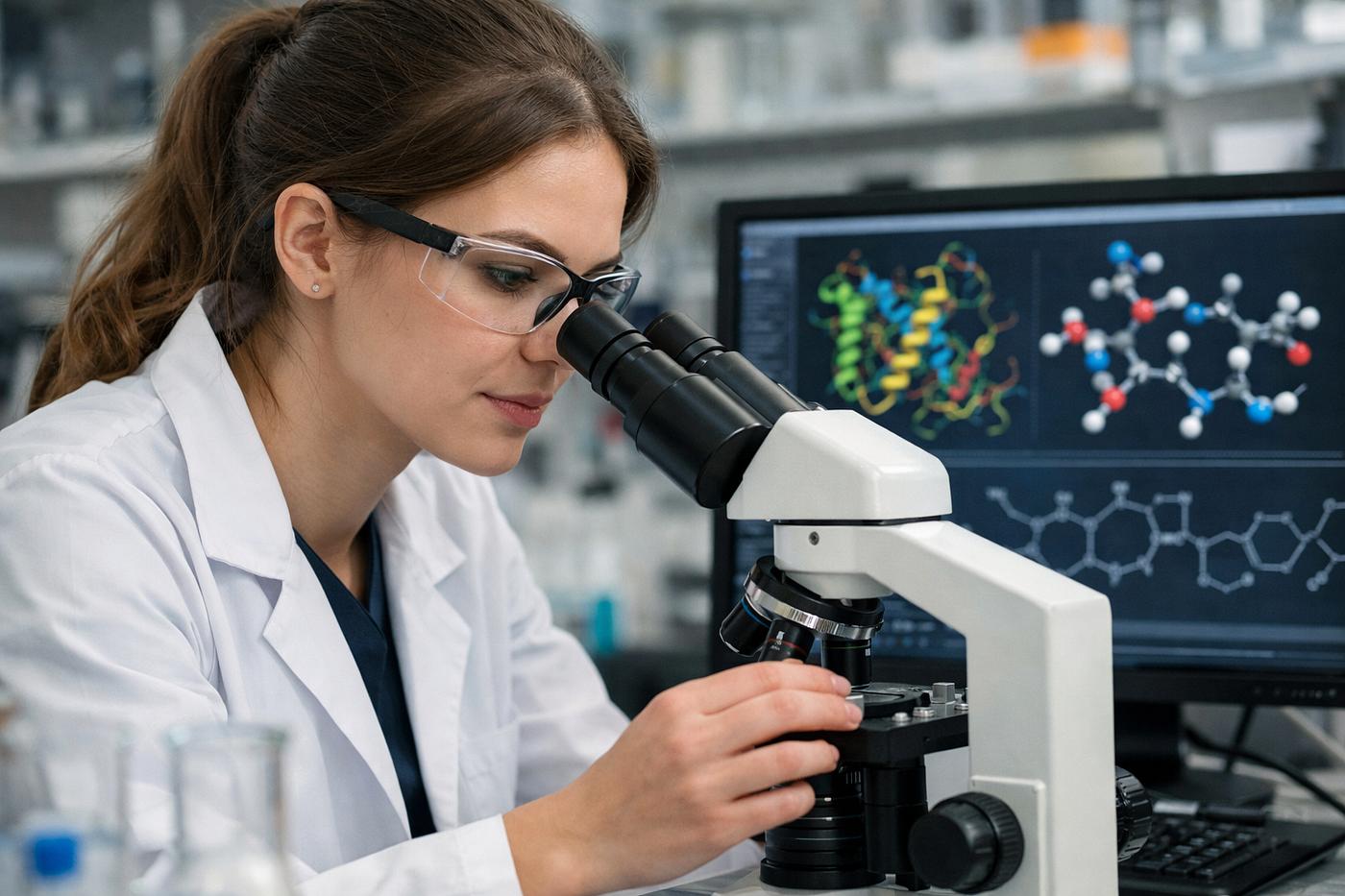
Chemistry and artificial intelligence are increasingly working together to transform how scientists explore molecules, understand chemical reactions, and develop new materials. By combining experimental evidence with machine learning, molecular simulations, and data-driven prediction, researchers can investigate complex scientific questions more efficiently. This combination is reshaping computational chemistry, materials science, biotechnology, and laboratory research.
What Is AI-Driven Scientific Discovery?
Scientific discovery traditionally involves observation, hypothesis development, experimentation, and interpretation. Chemistry contributes knowledge about molecular structures, chemical bonds, reaction mechanisms, and the properties of matter. Artificial intelligence adds computational methods that can identify patterns in large datasets and estimate relationships that may be difficult to detect using conventional analysis alone.
In AI-driven scientific discovery, algorithms learn from existing experimental measurements, published data, molecular structures, or computational simulations. Scientists can use these models to prioritize experiments, generate candidate molecules, estimate material properties, and investigate possible reaction pathways. Their predictions must still be assessed against reliable data and appropriate experiments.
How Artificial Intelligence Is Changing Chemistry
Modern chemical research can generate enormous quantities of information, from molecular descriptors and spectroscopy measurements to reaction conditions and material performance data. Machine learning can help researchers analyze these datasets and identify useful patterns.
Molecular Property Prediction
AI models can estimate selected molecular properties, such as solubility, stability, or electronic characteristics, when supported by suitable training data and validated prediction methods.
Chemical Reaction Prediction
Machine learning can analyze reaction datasets to suggest likely products, compare possible transformations, and support the planning of chemical synthesis.
Materials Discovery
Data-driven models can help screen candidate materials for properties relevant to batteries, catalysts, polymers, semiconductors, and other areas of materials science.
Machine Learning and Computational Chemistry
Computational chemistry uses mathematical models and computer-based simulations to investigate molecular systems and chemical processes. Methods such as density functional theory, molecular dynamics, and quantum chemistry provide valuable insights into molecular structure, energy, and interactions.
Machine learning can complement these methods by learning relationships between molecular configurations and calculated or measured properties. Depending on the model, this may reduce the computational cost of evaluating certain candidates and help researchers explore larger chemical spaces.
- Representing molecules using structures, descriptors, or learned embeddings.
- Training models on experimental or computational datasets.
- Predicting properties for previously untested candidates.
- Comparing predictions with reference calculations or laboratory measurements.

From Molecular Data to New Scientific Insights
Molecules can be represented in several ways, including chemical structures, molecular fingerprints, physicochemical descriptors, and three-dimensional coordinates. AI systems process these representations to learn patterns associated with specific chemical properties or experimental outcomes.
For example, a researcher investigating a new material may use a model to rank candidate compositions according to a target property. Rather than testing every possibility, the team can focus on promising candidates, conduct laboratory experiments, and use the resulting data to refine the next round of predictions.
Key concept: AI is most useful when it strengthens the scientific process—not when it replaces it. Experimental validation, appropriate controls, reliable datasets, and transparent reporting remain essential for trustworthy conclusions.
Applications of Artificial Intelligence in Chemical Research
The integration of chemistry and AI supports a growing range of research activities. The best approach depends on the scientific objective, the availability of high-quality data, and the accuracy required for a particular application.
| Research area | How AI can contribute |
|---|---|
| Computational chemistry | Approximate selected molecular properties and help prioritize computational calculations. |
| Chemical synthesis | Suggest reaction pathways and analyze relationships between reactants, conditions, and products. |
| Materials science | Screen candidate materials and estimate properties before experimental testing. |
| Spectroscopy | Help classify spectra, recognize patterns, and support interpretation alongside reference data. |
| Laboratory automation | Support experiment selection, workflow optimization, and iterative testing in suitable automated systems. |
| Biotechnology | Assist with molecular data analysis, protein-related research, and the investigation of biological systems. |
AI, Laboratory Automation, and Faster Experimentation
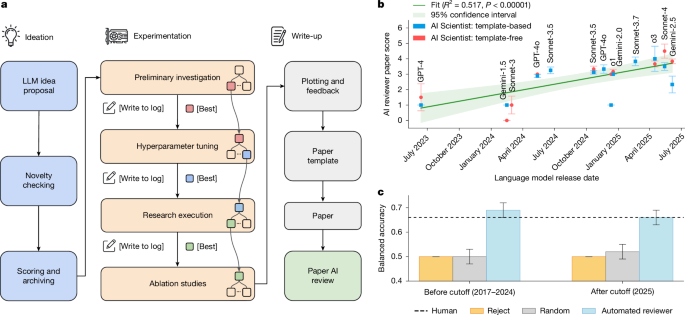
Laboratory automation can connect AI-based predictions with practical experimental workflows. In some research environments, software helps select the next experiment, robotic equipment performs predefined procedures, and analytical instruments return measurements for evaluation.
This iterative approach is sometimes called a closed-loop or self-driving laboratory. Its purpose is to use experimental feedback to guide subsequent investigations. Although such systems can improve efficiency in suitable settings, they require carefully designed protocols, reliable instruments, safety controls, and human oversight.
Challenges and Limitations of AI in Chemistry
Artificial intelligence offers powerful research tools, but its output is only as dependable as the data, assumptions, and evaluation methods behind it. Chemical systems can be complex, and a model that performs well on familiar examples may be less reliable when presented with unfamiliar molecules or experimental conditions.
- Data quality: inconsistent measurements and incomplete datasets can affect model performance.
- Generalization: predictions may be less accurate for chemical structures outside the training data.
- Interpretability: some models do not clearly explain why they produce a particular prediction.
- Experimental reproducibility: computational results must be evaluated against appropriate measurements.
- Computational resources: training and operating advanced models can require substantial infrastructure.
- Scientific responsibility: researchers must document uncertainty, limitations, and the methods used.
Combining domain expertise, careful model evaluation, independent testing, and experimental evidence helps researchers determine when AI predictions are useful and when further investigation is necessary.
The Future of Chemistry and Artificial Intelligence
Future advances may strengthen the connection between molecular modeling, generative AI, robotics, and experimental science. Researchers are exploring systems that can propose candidate structures, estimate properties, recommend experiments, and update their models as new measurements become available.
Another important direction is the development of models that combine different kinds of scientific information, including molecular structures, reaction data, spectroscopy, and laboratory observations. These approaches may help researchers build a more complete picture of complex chemical systems.
Progress will depend on reliable benchmarks, transparent reporting, high-quality experimental data, and collaboration between chemists, computational scientists, engineers, and data specialists. AI is not a substitute for scientific reasoning; it is an additional tool for asking better questions and exploring possibilities more efficiently.
Frequently Asked Questions
How is artificial intelligence used in chemistry?
AI is used to predict molecular properties, analyze chemical reactions, interpret selected spectroscopy data, screen candidate materials, and support experiment planning.
What is machine learning in chemistry?
Machine learning uses algorithms to identify patterns in chemical datasets and build models that estimate properties or outcomes for new examples.
Can AI discover new molecules?
AI models can propose or prioritize candidate molecules with desired characteristics. Their practical value depends on chemical feasibility, reliable predictions, and experimental validation.
What is the difference between AI and computational chemistry?
Computational chemistry uses mathematical and physical models to study chemical systems. AI uses data-driven methods to learn patterns and make predictions. The two approaches can complement each other.
Does AI replace laboratory experiments?
No. AI can help prioritize experiments and interpret results, but experimental work remains important for confirming predictions and evaluating real-world chemical behavior.
Why is data quality important for AI-driven discovery?
Models learn from the examples they receive. Accurate, representative, and well-documented data support more reliable evaluation and help researchers identify the limitations of predictions.
Scientific References and Further Reading
- Journal of Chemical Information and Modeling — Chemical informatics and computational methods
- Nature — Research on machine learning across scientific disciplines
- Chemical Science — Research in chemistry and emerging scientific methods
- PubMed — Scientific literature on AI, chemistry, and molecular research
- Google Scholar — Search for peer-reviewed publications on AI-driven chemistry
Conclusion: A New Era of Scientific Discovery
Chemistry provides the scientific foundation for understanding molecules and reactions, while artificial intelligence offers new ways to analyze data, generate hypotheses, and prioritize experiments. When combined with computational modeling, experimental validation, and human expertise, these approaches can help researchers explore chemical space, investigate new materials, and advance scientific knowledge.